In Other News · United States
Charted: Why early midterm results can be misleading
Source: Axios
Summary
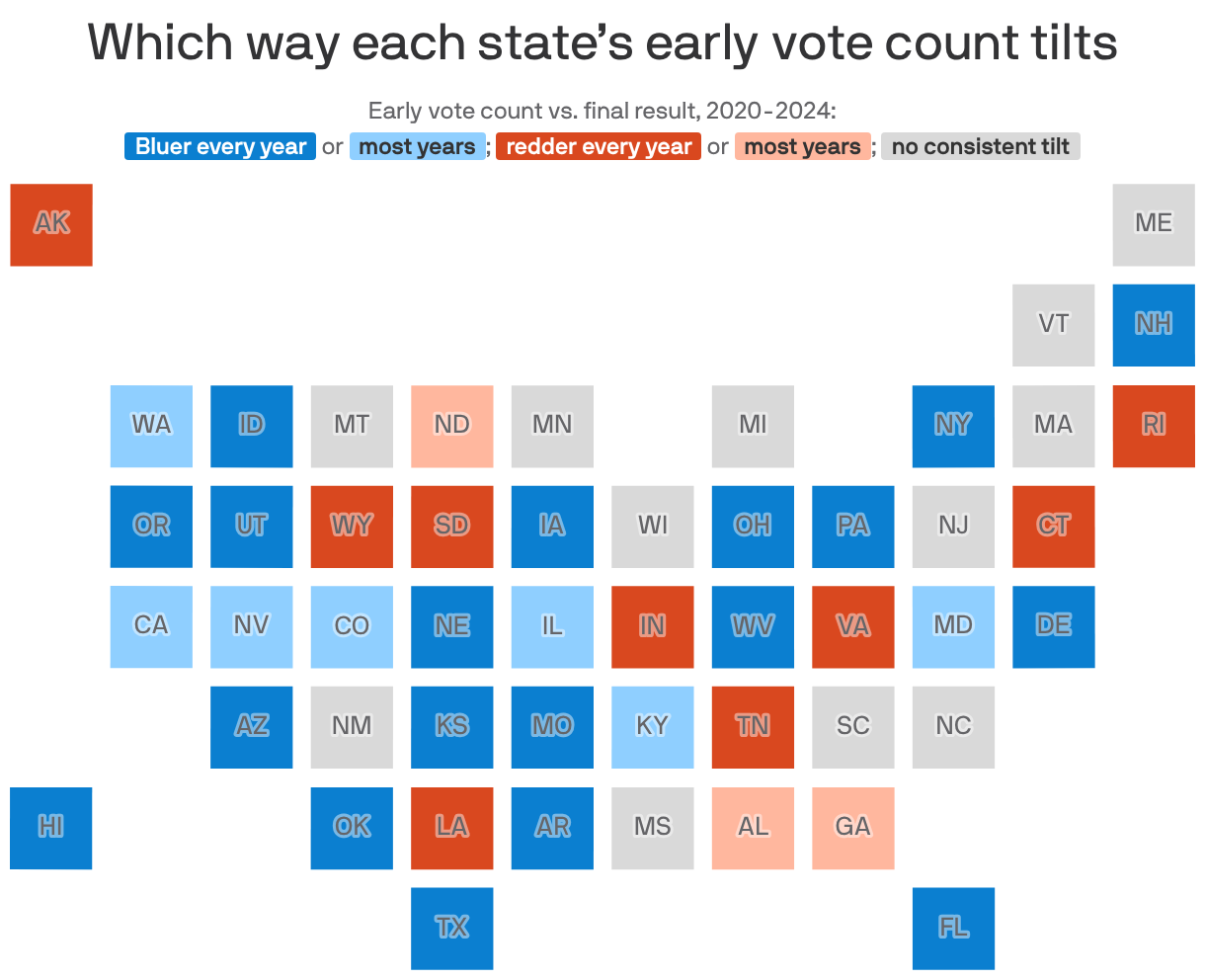
Data: AP via The New York Times and Axios research; Chart: Andrew Pantazi/AxiosThe first votes counted Tuesday night will almost certainly look redder than the final result, and control of the House and Senate could take days to settle.Why it matters: Early leads can create false impressions of who's winning and suspicion when those leads vanish. Election night is really election week. By the numbers: AP didn't call control of the House until seven or eight days after Election Day in each of the past three elections.The Senate was settled by 10:44pm on election night in 2018 and at 12:06am the next morning in 2024. In 2022, it took four days, and in 2020, it wasn't called until Georgia's January runoffs, two months later.State of play: Republicans hold 53 Senate seats. Democrats need a net gain of four for a majority.The red head start: In every national election since 2018, the House and Senate votes counted by 9pm ET were 4 to 9 percentage points more Republican than the final result, an Axios analysis of AP and Edison Research vote counts found.It's mostly geography. Fast-counting Florida and other right-leaning states report first. At 9pm on election night 2022, Florida accounted... You'll be taken to www.axios.com